Growing with Children
Growing with Children
How to start a family garden with children: choosing easy crops, sowing in containers and window boxes, growing potatoes and turning a small patch into food.
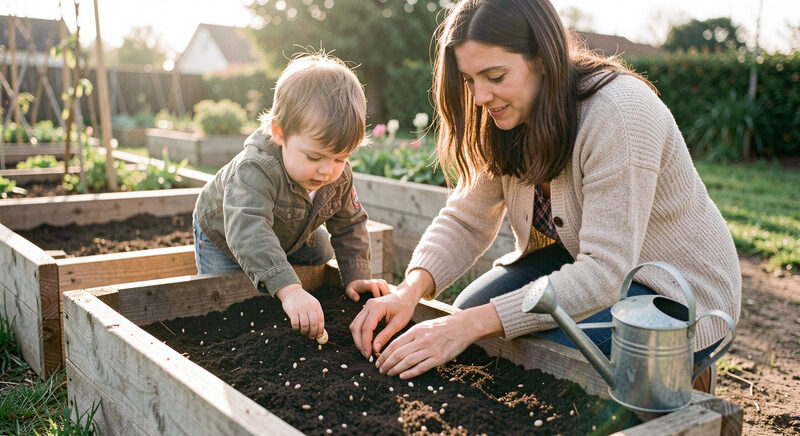
Growing food with children is less about the size of the plot than about the number of small, repeatable jobs a child can own. A family garden can be a raised bed, a row of pots on a step, a window box, or a strip of ground beside a shed, and all of them teach the same lessons: that a seed needs soil, water and light, that a plant takes time, and that the result can be eaten. This section gathers the guides that take a family from the first packet of seed to a plate of food.
Start where the light is
Before buying anything, watch the garden for a day and note where the sun falls. Most vegetables want six hours of direct light, and a spot that is shaded until noon will grow leaves but little fruit. If the only sunny place is a balcony or a doorstep, that is enough: containers are a complete way to grow, not a poor substitute. The guide to growing vegetables in containers covers the pots, compost and crops that suit a small, paved space, and the same principles apply to a window box.
Once the light is known, choose the smallest patch that will work and keep it close to the house. A bed a child passes every day is watered and watched; a bed at the end of a long garden is forgotten by June.
The first season
The first year is about proving that the garden works. Sow radishes, lettuce and cress, which answer within days and weeks, and add one or two slower crops for the middle of summer. The guide to easy vegetables for children to grow lists ten forgiving crops with sowing times and spacing, and the guide to gardening with children sets out the tools, the ground preparation and the short routine that keeps the plot going.
Keep the first season small on purpose. One bed, a few pots and a handful of crops are easier to look after than a large plot, and a garden that produces something is a garden a child will want to return to next year.
Growing up and along
Height makes a small garden productive and interesting. Climbing beans and peas grow up a frame, a wigwam or a teepee, and they crop heavily for the space they take. The guide to making a bean teepee turns that support into a den, which is one of the best ways to keep a child involved through the season. Potatoes grown in bags are the other great use of a small space: the guide to growing potatoes in containers explains how a bag on a patio produces a crop that is tipped out in a single, memorable moment.
Watering, feeding and the weekly round
A garden runs on small, regular attention rather than big efforts. Watering in the morning, a finger pushed into the soil to check the moisture, a few weeds pulled before they seed, a look under the leaves for pests: these are the jobs that decide the crop. A child can take on one of them, such as filling a can or checking the pots, and the habit matters more than the volume of work.
Feeding matters most in containers, where the compost runs out of nutrients after a few weeks. A slow release feed at planting and a liquid feed once fruiting begins will keep pots productive. In open ground, a layer of compost in spring is usually enough for a first season.
Problems, and how to meet them
Every garden has losses, and a family garden has more, because it is busy and not always watched. Slugs will find the lettuce, birds will take the peas, and a dry week will check the beans. None of this is a reason to stop. The guide to organic slug control covers the methods that protect a crop without pellets, which is the safer choice where children play. Frost, drought and pests are all manageable with timing, a little protection and a willingness to sow again.
Treat each problem as a question rather than a failure. What ate it, what would keep it off, what can be sown in its place. A child who has seen a crop lost and a second sowing succeed has learned something about gardening that a perfect season would not teach.
From the patch to the plate
The point of growing food with children is the eating. Pick just before a meal, wash everything, and let the child carry the harvest indoors. A bowl of peas that never reaches the kitchen, a lettuce cut for lunch and a potato boiled within an hour of lifting are the best arguments a garden can make. The guide to eating from the patch takes the story from picking to cooking, with the food safety points that matter when produce comes from a garden.
Tools and a first shopping list
A first garden needs very little, and almost none of it is expensive. A hand trowel, a small hand fork, a watering can a child can carry when full, a pair of gloves and a few packets of seed will start a family off. Add a ball of twine, a handful of canes or sticks for supports, and a couple of buckets for carrying compost and weeds. If there is a bed to dig, an adult will need a full size fork and spade, but the child can work alongside with their own tools rather than the heavy ones.
Buy seed by the packet rather than in bulk, and choose varieties marked as suitable for beginners or for containers. A single packet of lettuce, one of radish and one of climbing beans will fill a first season and leave seed for a second sowing. Keep the packets dry in a tin, note the sowing date on a marker, and the whole garden stays cheap and legible from the first week.
Keeping the year going
Spring is for sowing, summer for watering and picking, autumn for clearing and putting the bed to rest, and winter for planning and a few hardy crops in pots. A simple calendar on a shed door, with the month and the job, keeps the whole family oriented. Children like to tick the months off, and the ticking is itself a lesson in how a garden runs on time.
Beyond the first year, the garden can grow with the family: a second bed, a rotation of crops, a compost heap, a few fruit bushes. The three guides in this section, on starting out, on easy crops and on containers, are the foundation, and the other two sections of the magazine, on garden play and crafts and on garden care and safety, carry the project further into building, making and keeping the plot safe.
Growing with Children
Gardening with Children
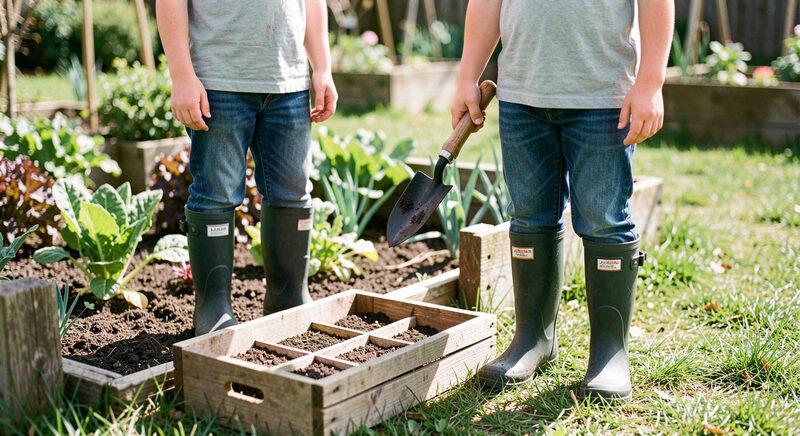
A practical start to gardening with children: planning a small plot, tools that fit small hands, sowing the first seeds and keeping the work short and regular.
A patch the size of a door, tools that fit, and a short weekly round.
Growing with Children
Easy Vegetables to Grow
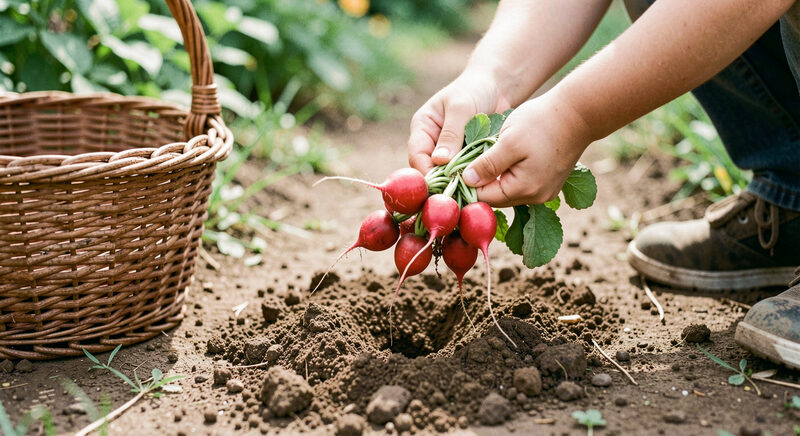
Ten vegetables that forgive a beginner, from radishes and lettuce to peas and courgettes, with sowing times, spacing and the harvests children can pick.
Ten crops that answer within days and forgive a beginner.
Growing with Children
Growing Vegetables in Containers
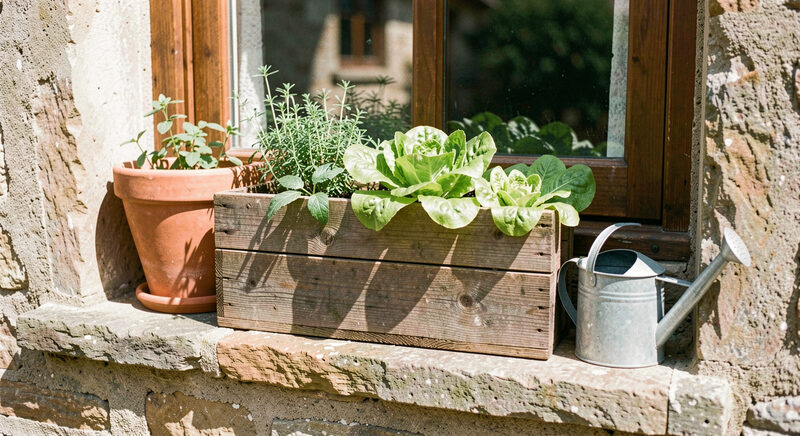
Grow food without a garden: the pots, compost and crops that suit containers and window boxes, with watering, feeding and the vegetables that stay small.
A balcony, a step and a window box are a complete way to grow.
Growing with Children
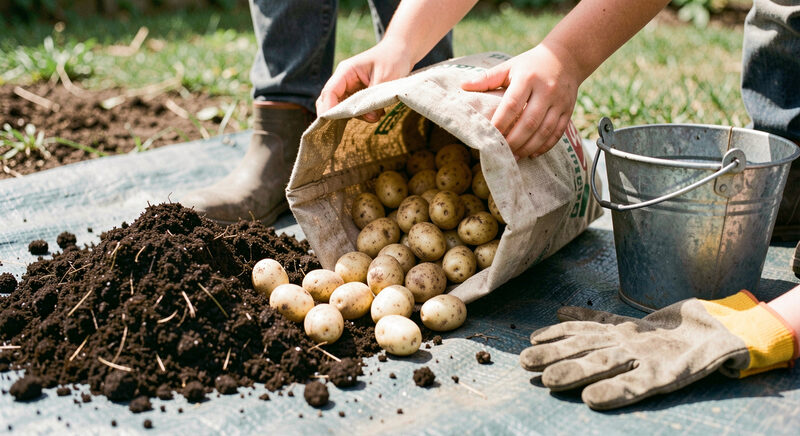
Growing Potatoes in Containers
Grow potatoes in bags, buckets and pots: choosing seed potatoes, earthing up, watering, and the day children tip out the bag to find the crop.
A bag, some seed potatoes, and a crop tipped out at the end.
Growing with Children
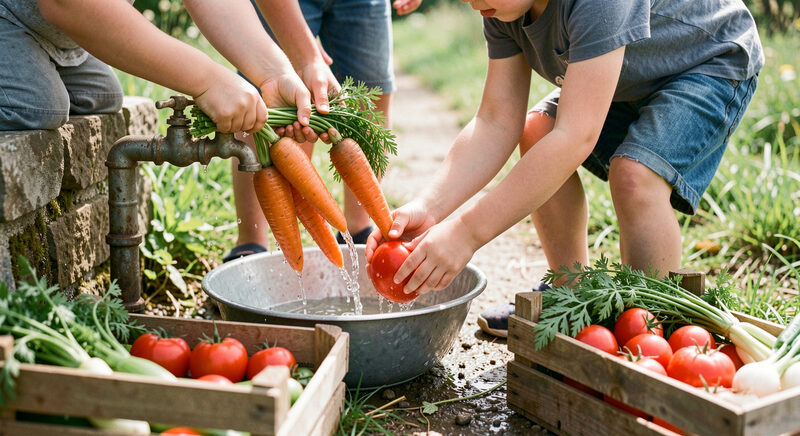
From the Patch to the Plate
How growing food changes what children eat: picking and cooking together, simple garden recipes, tasting new vegetables and keeping harvests safe to eat.
Picking, washing, cooking: the step where the garden reaches the plate.