Growing with Children
From the Patch to the Plate
How growing food changes what children eat: picking and cooking together, simple garden recipes, tasting new vegetables and keeping harvests safe to eat.
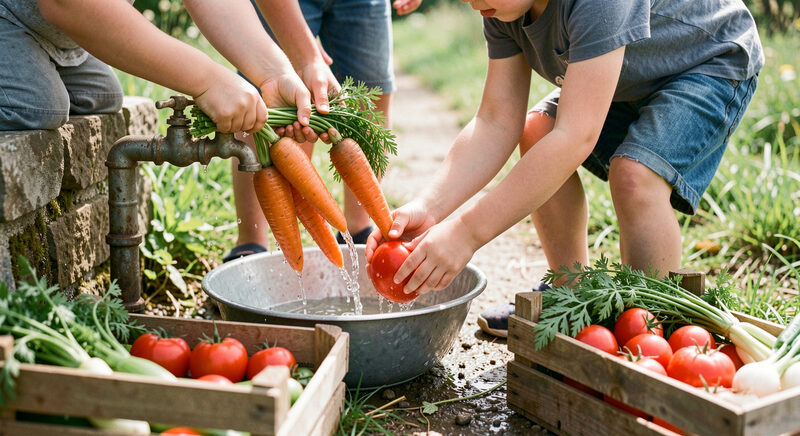
Children who grow vegetables eat more of them, and the reason is simple: a carrot pulled from the ground is a different food from a carrot from a bag, and a pea eaten straight from the pod tastes sweeter than one on a plate. This guide is about the step after the harvest, when the picking turns into cooking and eating, and about the small safety points that matter when food comes from a garden rather than a shop.
Why growing changes eating
A child who has watered a tomato plant for weeks has a reason to try the fruit. The link between the two is not automatic, but it is strong, and it is built on ownership rather than persuasion. The best thing a parent can do is to hand over the picking: let the child choose which lettuce to cut, which beans are ready, which strawberry is red enough. The choice is the beginning of the appetite.
Growing also makes the work visible. A child who has thinned a row of carrots, pulled weeds from between the onions and carried a full can of water knows what a vegetable costs in time. That knowledge tends to make a plate of food more interesting, not less.
Pick and eat the same day
The shortest route from plant to plate is the one that keeps the flavour. Salad leaves, herbs, peas and new potatoes are at their best within hours of picking. Make a habit of picking just before a meal, and let the child carry the bowl to the kitchen. A handful of herbs picked and torn over a dish teaches the connection between a plant and a taste more clearly than any explanation.
Some crops can be eaten straight in the garden: peas, mangetout, sugar snap, cherry tomatoes, strawberries, and the small leaves of lettuce and chard. Rinse them at an outdoor tap if there is one, or in a bowl in the kitchen, and set a rule that anything eaten in the garden is washed first.
Simple things to cook with children
Not every harvest needs a recipe. A bowl of new potatoes boiled and buttered, a plate of peas steamed for three minutes, a salad of leaves and radishes with a little oil and lemon, and a courgette sliced and fried until golden are all within reach of a child who can stir and count minutes. Older children can make a simple soup from a pumpkin or a pile of courgettes, roast a tray of root vegetables, or bake a potato they grew themselves.
Keep the tasks age appropriate. Very young children can wash, tear leaves, and stir a cold mixture. From about six, they can peel a cooled potato, pod peas and measure ingredients. From about nine, with supervision, they can use a hob and a knife. The point is to keep the child doing something real, not watching.
Food safety from the garden
Garden produce needs the same care as any fresh food, with a few extra points. Wash everything, especially leaves and anything grown close to the ground. Do not eat potatoes that have turned green, and cut away any green patches, because the colour comes from a compound called solanine that is not good to eat in quantity. Do not eat raw beans: runner beans, French beans and broad beans should be cooked, because raw beans contain a substance that can cause stomach upset. Rhubarb leaves are not edible and should go on the compost, not into a pot.
If the garden is visited by cats, dogs or foxes, wash the produce and keep a cover over low growing salad. Do not use garden chemicals on crops that children will pick, and follow the label if any product is used at all. The guide to garden safety covers the wider question of what is safe to have in a garden where children play and eat.
Involving children in the planning
The eating starts before the cooking, when the crop is chosen. A child who picked the seed packet, decided where the row would go and watched the plant grow has a stake in the result that no amount of persuasion can create. Let the child choose one crop for the year, even a small or unusual one, and give it a place in the bed. It might be a purple carrot, a striped beetroot or a cherry tomato, and the choice matters more than the plant.
Involve children in the small decisions too: which lettuce to cut for lunch, whether the herbs go into the dressing or on top, how the courgettes should be sliced. These are real choices with a visible outcome, and they turn a plate of food into something the child helped make. Keep a note of what was grown and eaten through the year, and look back at it in winter when the beds are bare. That record becomes a plan for the next season and a reminder of what worked.
Getting a fussy eater to try something
Do not make the first taste a test. Offer a single pea, a quarter of a tomato, one small leaf, with no pressure and no reward for eating it. Let the child see an adult eat the same thing. Grow something the child chose, even if it is a flower rather than a vegetable, so the garden is not only about food. And accept that a vegetable refused this month may be accepted next year, especially if the child grew it.
Cooking together is often the way in. A child who has stirred the soup is far more likely to taste it, and a child who has chosen the pumpkin at harvest will want to see what happens to it. Keep the kitchen calm, let the mess happen, and put the result on the table without comment.
Keeping the habit through the year
Fresh garden food is a summer pleasure, but the habit can last all year. Freeze peas and beans, store onions and potatoes, make chutney from a glut of courgettes, and grow a few winter leaves in a pot on a windowsill. A child who helped fill the freezer in August can help empty it in January. The wider hub on growing with children places this page at the end of the growing chain, after the sowing, the watering and the harvest.