Growing with Children
Easy Vegetables to Grow
Ten vegetables that forgive a beginner, from radishes and lettuce to peas and courgettes, with sowing times, spacing and the harvests children can pick.
Some vegetables forgive a beginner. They come up quickly, they do not need much attention, and they give a child something to pick within weeks rather than months. The ten crops below are the ones that work best in a family garden, whether the space is a raised bed, a row of pots or a strip beside a wall. Each entry says when to sow, how far apart, and what the harvest looks like when it is ready.
Radishes, the fastest reward
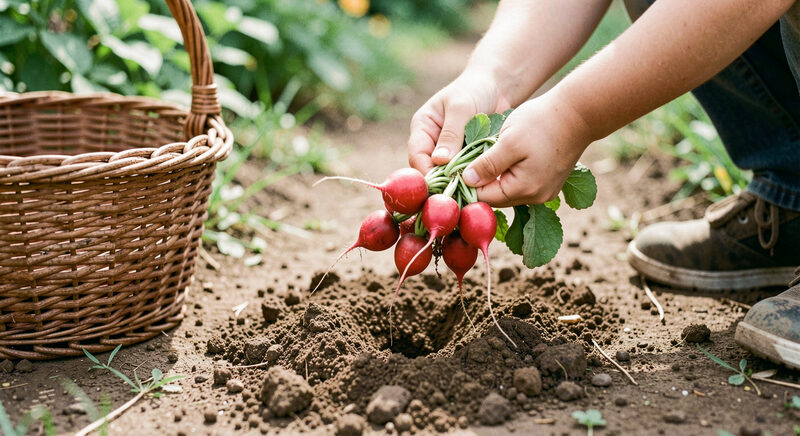
Radish seed germinates in three or four days and is ready to pull in three to four weeks. Sow a short row every fortnight from early spring to midsummer so the supply does not arrive all at once, about one centimetre deep and two to three centimetres apart. The roots are best when they are the size of a marble; left too long they turn woody and hot. Children can sow, thin and pull these on their own.
Lettuce and salad leaves
Loose leaf lettuce is easier than a hearted variety, because it can be cut and will grow again. Sow thinly on the surface and barely cover, since lettuce needs light to germinate. Thin to about twenty centimetres for full heads, or closer if the leaves are to be cut young. Sow a small patch every three weeks for a long season, and keep the soil moist in hot weather or the plants will bolt and turn bitter. A cut and come again row is ideal for a child to pick a handful for a sandwich.
Peas, for eating standing up
Peas are the crop children eat before they reach the kitchen. Sow a double row about five centimetres deep in early spring, with the seeds five centimetres apart, and give them twiggy sticks or netting to climb. Keep them watered while they flower, and pick the pods while they are still firm and green. Mangetout and sugar snap types can be eaten pod and all, which makes them even better for a young picker.
Runner beans and climbing French beans
Climbing beans grow tall enough to make a den, which is why they suit a child's garden so well. Sow the seed about five centimetres deep, one seed to a pole, and water well until the plants are established. They need a support: a wigwam of canes, a frame, or the teepee described in the guide to making a bean teepee. Pick the pods young and often, every few days, and the plants will keep producing into autumn.
Courgettes and summer squash
One or two courgette plants are plenty for a family, because each plant produces heavily. Sow the seed on its edge about two centimetres deep indoors in late spring, and plant out once the risk of frost has passed, spacing plants about ninety centimetres apart. Water at the base rather than over the leaves, and pick the fruits small, at about fifteen centimetres, while the skin is soft. A courgette left to grow into a marrow will slow the plant down.
Potatoes, the best surprise
A potato crop is the closest thing in a garden to a magic trick, because the harvest is hidden until it is tipped out. Grow them in a bed, a bucket or a bag; the guide to growing potatoes in containers covers the details. Plant seed potatoes about fifteen centimetres deep and thirty apart, earth up the stems as they grow, and lift the crop once the leaves have died back. Early varieties are ready in about twelve weeks.
Carrots, in deep, stone free soil
Carrots need a fine, deep tilth, because a stone in the way makes a forked root. Sow thinly, about one centimetre deep, and thin the seedlings to five centimetres apart once they are big enough to handle. Keep the row watered, especially while the roots are swelling, and pull a few young carrots as a treat before the main harvest. Short, round varieties do better in shallow or heavy soil than long ones.
Swiss chard, a cut and come again leaf
Chard is generous and colourful, with stems that range from white to red and yellow. Sow about two centimetres deep and thin to thirty centimetres, or closer if the leaves are to be cut young. Cut the outer leaves and the plant will keep producing for months, right through a mild winter. It is one of the easiest crops for a child to harvest, because the leaves come away in the hand.
Pumpkins, for the autumn
A pumpkin takes space and time, but it gives a family a harvest to look forward to. Sow indoors in late spring and plant out after the last frost, spacing plants a metre or more apart, or grow a compact variety in a large pot. Water steadily, and once the fruit has set, reduce the watering so the pumpkin ripens. Cut it with a length of stem attached and leave it to cure in the sun for a week before storing.
Cress, on a windowsill
Cress is the fastest crop of all and needs no garden. Scatter the seed on damp kitchen paper or a thin layer of compost in a shallow tray, keep it damp, and cut the seedlings in about a week. It is a good first project for a very young child, and a useful one in winter when the outdoor beds are quiet.
What to sow first
Start with radishes, lettuce and cress, because they answer the question of whether the garden works within days. Add peas or beans for something tall to watch, and a courgette or a potato plant for a bigger harvest later. Sow a little, often, rather than a lot at once, and let the child choose between two or three of these crops rather than being given the whole list. The first year is about proving that things grow; the second can be about planning a proper rotation, which the hub on growing with children sets out.